Old Library Book Earring Sublimation Review
As a designer who spends half my life troubleshooting thread tension and the other half judging whether a design actually translates well from screen to fabric, I approach every new digital asset with a mix of hope and skepticism. Recently, I pulled up the Old Library Book Earring Sublimation file to test its viability for a few upcoming client projects and personal craft business listings. The premise is simple: a retro library bookshelf theme adapted for small-format jewelry sublimation. But the real question for any embroidery or print decorator is how this graphic behaves when it becomes part of a larger, tactile product.
I decided to evaluate this not just as a standalone earring design, but as a potential component in broader handmade merchandise. Specifically, I wanted to see if the aesthetic of Old Library Book Earring Sublimation could anchor a cohesive brand identity for an Etsy shop focused on literary-themed gifts. Below is my practical breakdown of how this design holds up in real-world application.
First Impressions and Visual Personality
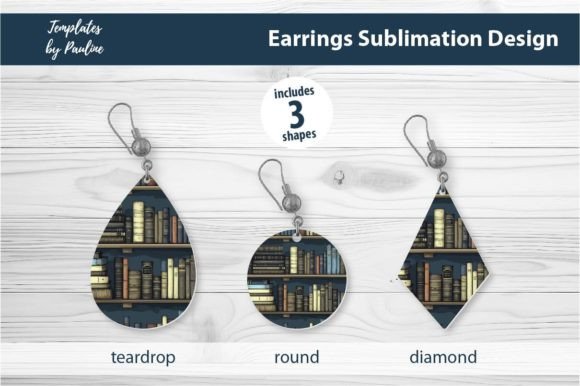
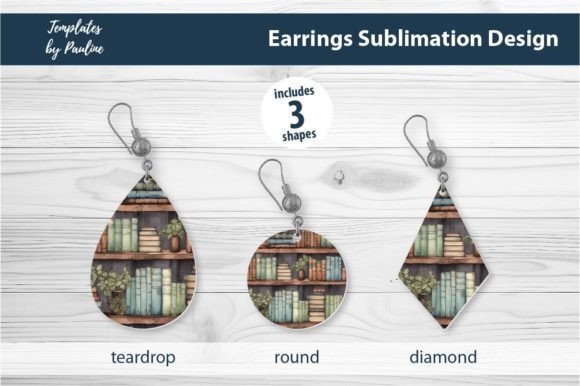
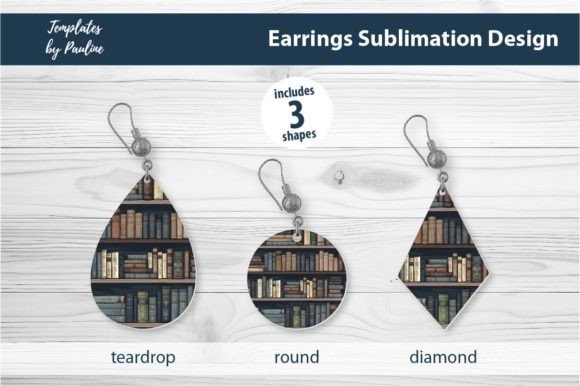
The moment you open the file, the mood is distinct. It isn’t trying to be modern minimalism or hyper-realistic 3D rendering. Instead, it leans into that cozy, nostalgic warmth associated with vintage libraries. For designers looking to add a touch of intellectual charm to their handmade product lines, this visual personality is a strong suit. The retro color palette suggests earth tones—mustard yellows, deep forest greens, and warm browns—which naturally pair well with cotton, linen, and denim fabrics.
From a layout perspective, the design is clean. It avoids clutter, which is crucial because we are dealing with small dimensions. When I look at Old Library Book Earring Sublimation, I see a design that respects negative space. This is vital for sublimation because ink bleeds slightly more than dye-sub transfers on certain synthetic blends. The clarity of the bookshelf structure remains intact even at smaller scales, suggesting that the original vector or high-resolution raster work was done with precision.
Real-World Application: Beyond the Earring
While the primary use case is clearly for creating earrings, a savvy Etsy seller or small shop product owner knows that versatility drives sales. I tested the concept of using this design as a central motif for a custom embroidered tote bag. The idea was to place a large-scale version of the bookshelf on the front pocket, with the actual earring design printed on a tag or woven label attached to the bag.
In this scenario, Old Library Book Earring Sublimation acts as a thematic anchor. It tells a story before the customer even reads the product description. It fits perfectly into categories like custom apparel accessories, student gifts, or teacher appreciation items. The design bridges the gap between fashion and function. If you are designing for a niche audience that loves reading, this specific imagery triggers an immediate emotional connection. It feels curated, not generic.
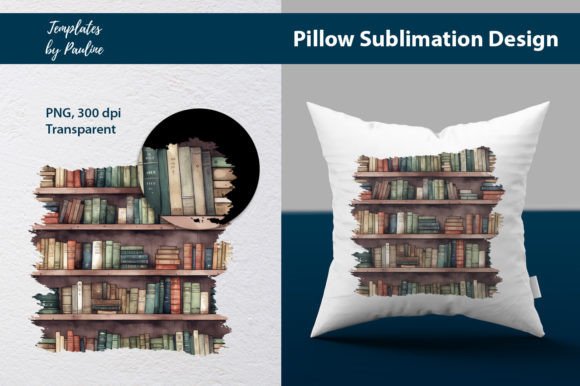
I also considered its use in holiday embroidery projects. During the fall and winter seasons, when people are buying gifts for book lovers, having a design that evokes the feeling of a quiet afternoon in a library is powerful. Imagine a set of matching kitchen towels or a pillow cover featuring this shelf, paired with the earrings. It creates a gift set that feels thoughtfully assembled rather than randomly thrown together.
Technical Performance and Stitch Clarity
When discussing machine embroidery design compatibility, we have to talk about detail retention. Although this is primarily a sublimation graphic, many creators digitize these visuals for embroidery or use them as reference for applique designs. The line weight in Old Library Book Earring Sublimation appears consistent. There are no overly thin lines that might disappear during the printing process or break easily if converted to a satin stitch.
For those using this as a base for digital embroidery file conversion, the contrast levels are favorable. High contrast ensures that the stitch density can be mapped effectively without muddying the image. If you are planning to turn this into an embroidered patch, the defined edges of the books and shelves will hold up well against the cut edge of the patch backing. However, always remember to check the fine details. If the tiny titles on the spines are too small, they may become illegible blobs after stitching. In such cases, simplifying the text or relying on the shape of the books alone is often a smarter design choice.
Where to Use Carefully
No design is universal, and Old Library Book Earring Sublimation has its limitations based on material and surface. Here are a few areas where you need to exercise caution:
- Textured Fabrics: If you are sublimating onto heavily textured polyester or blending this with rough canvas, the fine details of the bookshelf might get lost in the weave. Smooth surfaces yield the best results.
- Small Hoop Sizes: If you are digitizing this for very small hoop sizes (under 2 inches), you must simplify the design. The current level of detail might require too much stitch density for such a tiny area, leading to puckering or needle breaks.
- Dark Fabric Backgrounds: Sublimation works best on white or light-colored polyester. If you are attempting to print this on dark fabric, you will likely need a white underbase layer, which can alter the vibrancy of the colors. Test a swatch first to ensure the retro tones don’t turn muddy.
- Curved Surfaces: Applying this to caps or curved hats requires careful heat pressing. The flat nature of the design means it won’t stretch; ensure the curvature of the item doesn’t distort the straight lines of the bookshelf.
Impact on Brand and Customer Trust
Using a high-quality, thematic design like Old Library Book Earring Sublimation elevates the perceived value of your finished product. Customers can tell the difference between a clip-art mess and a professionally composed graphic. When your printable mockup looks sharp and cohesive, it builds trust. It signals that you care about the aesthetics of your craft business.
This design also supports brand consistency. If your shop focuses on vintage, academic, or cozy aesthetics, incorporating this bookshelf motif across different products—earrings, bags, stickers—creates a recognizable visual language. Buyers return to shops that feel familiar and polished. The retro vibe of this graphic appeals to a demographic that values authenticity and nostalgia, two key drivers in the current handmade market.
Practical Designer Notes
Before you start mass-producing items with this design, keep these steps in mind:
- Test on Scrap Fabric: Always run a test print on the exact fabric you plan to sell. Colors can shift dramatically depending on the polyester blend.
- Check Thread Color Contrast: If you are combining embroidery with this sublimation print, choose thread colors that complement the retro palette without clashing. Neutral threads often work best to let the graphic shine.
- Inspect Small Details: Zoom in to 100% on your screen. Are the book spines distinct? Is the shelf structure clear? If not, adjust the resolution or simplify the design before finalizing your design assets.
- Confirm Licensing: Ensure you have the right to sell finished goods made with this Graphics file. Commercial usage rights vary, and protecting your small business is paramount.
- Use Proper Stabilizer: If attaching this print to garments that will be embroidered around, use a stable backing to prevent shifting during the heat press or stitching process.
In conclusion, Old Library Book Earring Sublimation is a versatile, aesthetically pleasing asset that brings a specific mood to any project. It is well-suited for personalized gift markets, literary-themed boutiques, and anyone looking to add a touch of vintage charm to their apparel decorator offerings. With careful attention to fabric choice and detail scaling, it can be a standout element in your next collection.