Sheep Retro T-shirt Embroidery Review
As a designer who spends half the day staring at stitch charts and the other half troubleshooting tension issues on vintage machines, I don’t just look for "cute" designs. I look for viability. When a new asset lands in my inbox, my first question is always practical: Can this actually be stitched well? Will it hold up after twenty washes? Does it translate from a digital screen to physical thread without losing its soul?
This is where the Sheep Retro T-shirt design catches my eye. It arrives not just as a graphic, but as a potential cornerstone for a small business collection or a heartfelt personalized gift. The description notes it is ready for print and includes AI, EPS, and PNG files with a generous artboard size of 4500 x 5400px. While these are vector-friendly dimensions that suggest high-quality scalability, for our purposes as embroiderers, we need to strip away the marketing fluff and look at the stitching reality. Here is my honest breakdown of how this T-Shirt Designs category entry performs when you put it under the needle.
First Impressions: Mood and Visual Personality
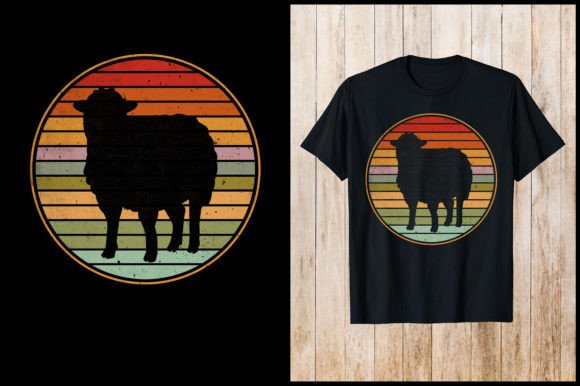
The moment you open the file, the retro aesthetic hits you. There is a specific nostalgia here—a blend of mid-century charm and modern minimalist appeal. For an embroidery project, this mood is crucial because it dictates the fabric choice and the overall vibe of the finished product. This isn’t a hyper-realistic portrait that demands millions of stitches; it’s a stylized representation that relies on clean lines and distinct shapes.
In the world of Graphics and machine embroidery design, simplicity often wins. The sheep motif is recognizable instantly. It feels friendly, approachable, and slightly whimsical without being childish. This makes it incredibly versatile. You aren’t limited to just one type of customer. A young mother buying a baby embroidery item for a nursery will see warmth, while a craft enthusiast looking for a custom apparel piece for themselves will see style. The visual personality is strong enough to stand alone, which means it doesn’t need excessive embellishment to feel complete.
Real-World Application: Where Does It Shine?
I recently imagined using this design for a batch of custom tote bag design items for a local farmers market pop-up. Why? Because the retro theme pairs beautifully with canvas or heavy cotton blends. When you stitch this onto a natural-colored tote, the contrast allows the design to breathe. However, let’s talk about the versatility beyond bags.
This design is a chameleon. It works exceptionally well for sweatshirt embroidery, particularly on cream, oatmeal, or heather grey fabrics where the retro tones can pop without clashing. I also see it thriving as an embroidered patch for denim jackets or backpacks. The clean edges of the sheep silhouette make it ideal for applique techniques if you want to add dimension, or for a solid fill stitch if you prefer a flat, classic look.
For Etsy sellers and small shop products, this is gold. It fits perfectly into seasonal collections. Imagine offering this as part of a spring lamb collection or pairing it with rustic elements for a farmhouse-style holiday embroidery line. It’s also surprisingly effective for home decor. Stitching this onto a linen pillow cover or a thick cotton tea towel adds a touch of curated charm that customers love. It elevates a simple kitchen towel from a utility item to a decorative accent.
The Technical Reality: Stitch Density and Detail
Here is where my designer hat tightens. The file provides AI, EPS, and PNG formats, which are excellent for scaling, but they do not inherently tell us the stitch count or density. As an experienced user, I know that a high-resolution PNG does not guarantee a good embroidery file unless the vector paths have been properly converted into stitch data. If you are using this as a base for digitizing your own machine embroidery design, you need to pay close attention to the curves.
Retro designs often rely on smooth, sweeping lines. In embroidery, these areas are prone to puckering if the stitch density is too high. You want to ensure that the fill stitches are balanced—dense enough to cover the fabric but light enough to allow the material to remain soft. If this design is being used as a reference for a satin stitch border, check the corner radii. Sharp corners in satin stitch can lead to thread breaks or messy transitions. A slight rounding or a tie-off adjustment can make the difference between a professional finish and a amateurish one.
Also, consider the hoop size. With an artboard that large, you have plenty of room to work, but you must decide on the final output size. Stitching this on a cap requires a much smaller scale than stitching it on a duvet cover. Always test the aspect ratio. If you stretch the design too wide on a narrow surface like a sleeve cuff, the sheep might look distorted. Keep the proportions true to the original vector to maintain that crisp retro integrity.
Fabric and Thread Considerations
The success of any embroidery project lies in the foundation. For this design, I recommend avoiding overly textured fabrics like bouclé or rough burlap. The fine details of the retro style could get lost in the weave. Instead, stick to smooth cottons, poly-cotton blends, or stable linens. These surfaces provide the necessary support for consistent stitching.
When selecting thread colors, think about contrast. If you are working on dark fabric, you’ll need a dense underlay and possibly a white backing layer to make the colors pop. Light pastel threads might get swallowed by navy or black fabric. Conversely, on light fabrics, avoid using very light threads for fine details, as they may disappear. Black or dark brown thread for the outlines usually works best to define the shape against lighter backgrounds.
Where to Exercise Caution
No design is perfect for every situation. There are specific scenarios where the Sheep Retro T-shirt design might struggle:
- Small Hoop Sizes: If you are trying to fit this into a 4x4 hoop, the detail might become muddy. Fine lines can merge together if the stitch resolution isn't high enough.
- Stretchy Fabrics: While it can work on jersey, you must use a stabilizer specifically designed for knits. Without proper support, the retro curves may distort during washing.
- Curved Surfaces: Applying this to a curved surface like a baseball cap requires careful planning. The design needs to be angled correctly so it doesn’t look warped when viewed from the front.
- Thin Fabric: On thin materials, dense fill stitches can create a stiff, uncomfortable patch. Consider using a lighter stitch pattern or adding a tear-away stabilizer behind the area.
Final Verdict: A Strong Asset for Makers
Overall, the Sheep Retro T-shirt design is a thoughtful, well-composed asset that understands the current market trend toward nostalgic, wholesome aesthetics. It offers a balance of simplicity and character that makes it easy to integrate into various product lines.
For the craft business owner, this is a low-risk, high-reward addition. It appeals to a broad demographic and works across multiple categories, from apparel decorators making custom tees to home goods makers creating cozy textiles. Just remember to treat the digital file with respect: check the licensing terms carefully before selling finished items, test your stitch settings on scrap fabric first, and always prioritize stability over speed.
If you are looking for a digital embroidery file that brings a smile to the face and a sense of comfort to the wearer, this design delivers. It’s not just a picture of a sheep; it’s a template for connection, whether you’re gifting a handmade blanket or building a brand identity around rustic charm. Proceed with confidence, keep your tension adjusted, and enjoy the process of bringing this retro vision to life.